IPS or OLED laptop screen: OLED now starts at ₹61,990
OLED is no longer the pricey choice: the Motorola moto book 60 has it from ₹61,990, while a 300-nit LCD ASUS costs ₹1,10,990. Here is who needs which screen.
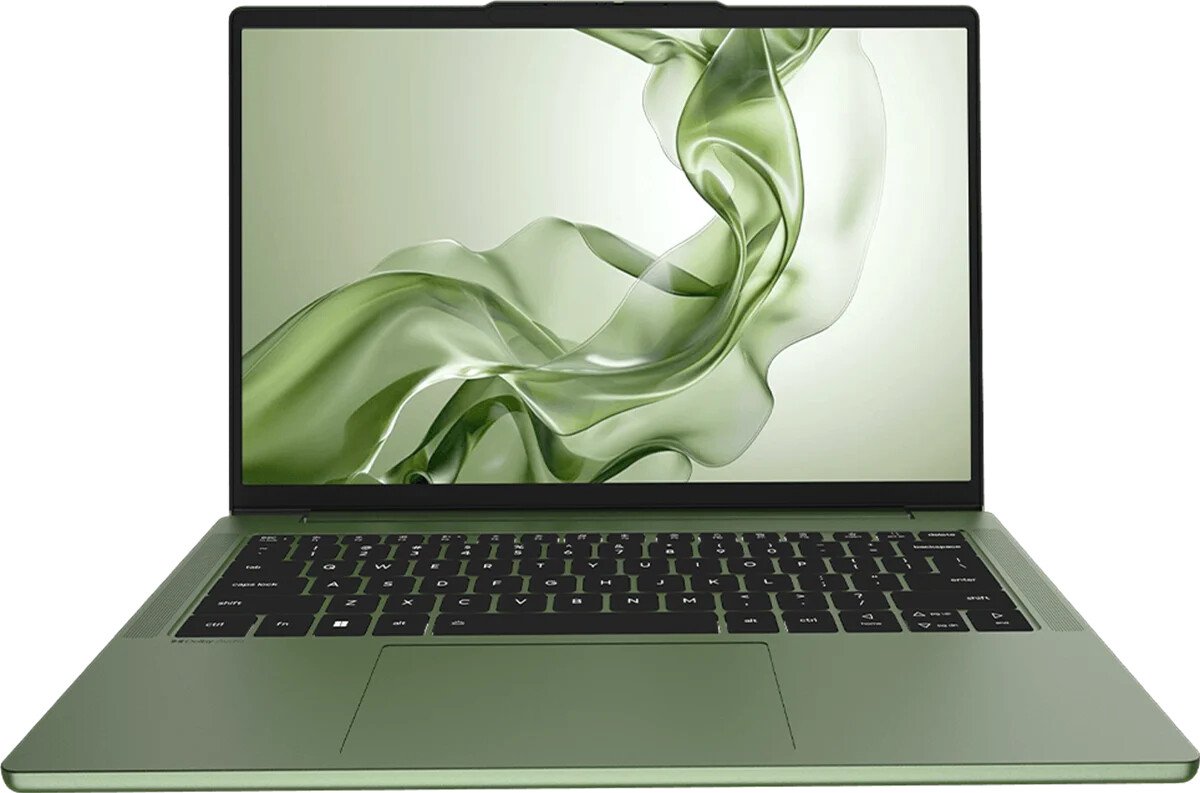
Pick OLED if you watch a lot of video, edit photos or work mostly indoors, and pick IPS (a standard LCD) if you work in bright rooms or want the lowest price. The old rule that OLED costs a fortune no longer holds: the Motorola moto book 60 has an OLED screen from ₹61,990, while the ASUS Vivobook S14 (S5452) charges ₹1,10,990 for a 300-nit LCD.
India prices below were checked on 21 November 2026 on The Synap’s own laptop pages.
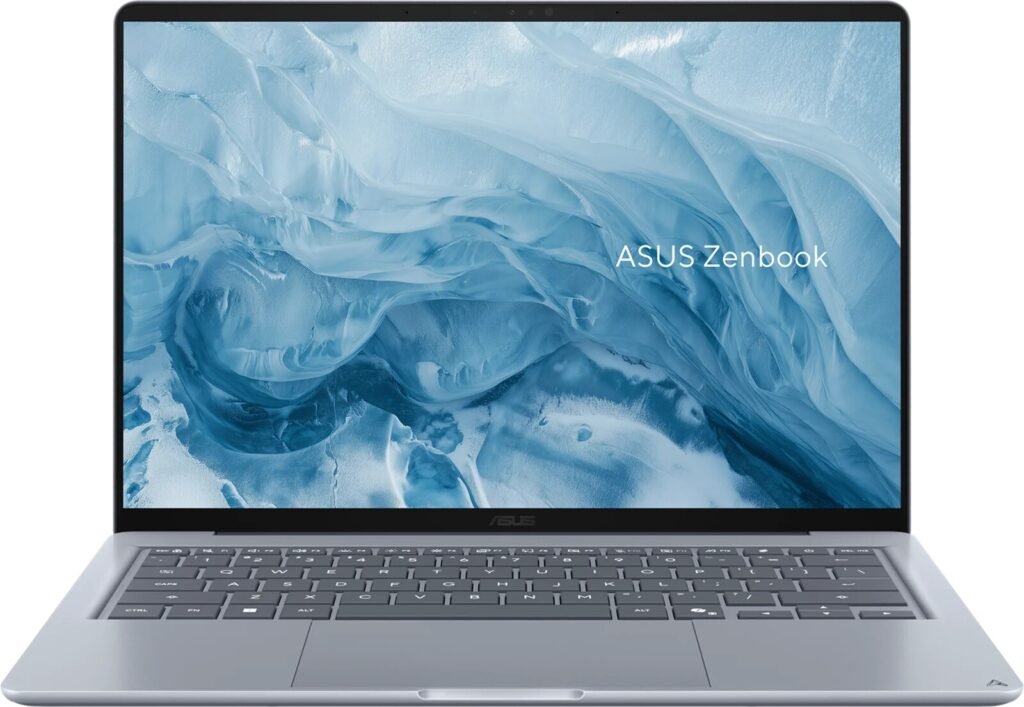
What is the actual difference between OLED and IPS?
An IPS screen is an LCD: a white backlight shines through a layer of liquid crystals, and the crystals decide how much light gets through. An OLED screen has no backlight. Each pixel makes its own light, so a black pixel simply switches off. That one change explains almost everything below.
| IPS (LCD) | OLED | |
|---|---|---|
| Blacks | Dark grey, because the backlight leaks | True black, because pixels switch off |
| Brightness in a sunny room | Usually the stronger of the two | Fine indoors; can struggle in direct light |
| Battery | Steady, whatever is on screen | Can save power on dark content, drains faster on white pages |
| Burn-in (a ghost of a static image) | Not a concern | Possible after very long hours of the same static image |
| Price | The cheaper panel | Used to be the premium option |
Is OLED worth paying extra for on a laptop?
It depends on what is on your screen all day. OLED is worth it for films, streaming, photo and video work, where deep blacks and rich colour show. It is a poor use of money if your day is spreadsheets in a bright office, because a spreadsheet is mostly white, and white is where OLED works hardest.
The price gap is also smaller than the usual advice says. Generic guides talk of an OLED premium of ₹25,000 or more. Our pages show a different picture: the Motorola moto book 60 starts at ₹61,990 with a WUXGA OLED panel, and the 2.8K OLED version of the same laptop is ₹74,990. That is ₹13,000 for a sharper screen on an otherwise identical 16GB, 512GB machine.
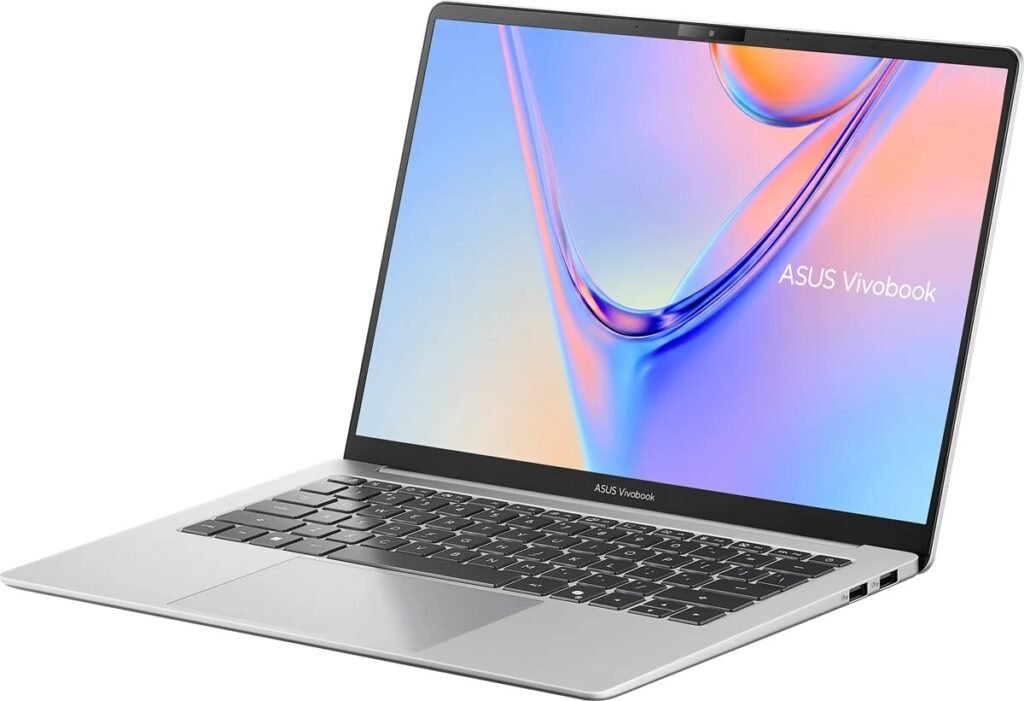
Do OLED laptops cost more than IPS in India today?
Not always, and that is the surprise. Price follows the brand and the processor more than the panel. Here are four laptops from The Synap’s catalogue, with the screen as the maker lists it.
| Laptop version | Screen | Peak brightness (maker) | Price today |
|---|---|---|---|
| Motorola moto book 60, Core 5 210H, 16GB, 512GB | WUXGA OLED, 120Hz | 500 nits | ₹61,990 |
| Motorola moto book 60, Core 5 210H, 16GB, 512GB | 2.8K OLED, 120Hz | 500 nits | ₹74,990 |
| ASUS Vivobook S14 (S5452), Core 7 350, 16GB, 512GB | FHD+ LCD, 60Hz | 300 nits | ₹1,10,990 |
| Dell 14S (2026), Core 7 350, 16GB, 1TB | 2.8K IPS LCD, 120Hz | 450 nits | ₹1,39,990 |
| ASUS Zenbook 14 (UX3480), Core Ultra 5 325, 16GB, 512GB | 3K OLED touch, 120Hz | 1,100 nits (HDR) | ₹1,60,990 |
The Dell is the one to watch. Its top version has a sharp 2.8K, 120Hz screen, but our page lists it as an IPS LCD, not OLED. At ₹1,39,990 it costs ₹29,500 more than the ₹1,10,490 version of the Motorola moto book 60 that pairs a 2.8K OLED with 1TB of storage. That is a price comparison only, since the two use different processors.
Does OLED always mean a high refresh rate and a sharp screen?
No. OLED describes the panel type, not its speed or sharpness. The cheapest ASUS Zenbook 14 (UX3480) sells at ₹1,31,990 with an FHD+ OLED at 60Hz. Stepping to the ₹1,60,990 Core Ultra 5 325 version gets a 3K screen at 120Hz, though that version also changes the processor and brings a bigger 70 Wh battery, so the ₹29,000 gap is not just the screen.
Read the version name, not the headline. A listing that says only “2.8K 120Hz” has told you the sharpness and the speed, and nothing about the panel type.
What about burn-in, flicker and battery on OLED?
Burn-in needs a static image shown for very long hours, such as a taskbar that never hides. Dark mode, an auto-hiding taskbar and a screen that dims when idle all help, and most people never see it. Some OLED panels also dim by flickering rapidly, which bothers a few people after long sessions; if you are sensitive to it, check the maker’s spec sheet before buying.
Battery depends on what you show. On dark content OLED can use less power, and on white pages more. Either way, battery hours on a box are the maker’s claim, not a test.
Which screen should you buy, by use?
| If you mostly… | Buy | Why |
|---|---|---|
| Watch films, edit photos or video | OLED | Deep blacks and rich colour; the 2.8K OLED moto book 60 at ₹74,990 is the value pick |
| Work in a bright office or by a window | IPS | Better in strong light, and cheaper |
| Want the lowest price | OLED or IPS | The WUXGA OLED moto book 60 at ₹61,990 beats a ₹79,990 IPS Dell 14S on screen type, with 8GB more memory |
| Leave one window open for 10 hours | IPS | No burn-in worry |
Best value: the 2.8K OLED version of the Motorola moto book 60 at ₹74,990, which also has upgradable memory (see which laptops let you add RAM). Poor value: the ASUS Vivobook S14 (S5452) at ₹1,10,990, because a 300-nit, 60Hz LCD at that price is the weakest screen in the table. If the Dell 14S is on your list, compare it with the moto book 60 first.
Screen is only one part of a laptop. For processors, read what laptop chip names mean. To see what your budget buys, start from laptops under ₹80,000, browse every laptop sorted by price, or use the laptop finder. The same question comes up on tablets: OLED or LCD on a tablet.
Quick answers
Is OLED better than IPS for a laptop?
For contrast and colour, yes. For bright rooms and long static work, an IPS screen is often the safer choice. The better panel is the one that matches what you do all day.
Do OLED laptops have burn-in?
It is possible after very long hours of the same static image, but dark mode, an auto-hiding taskbar and screen dimming reduce the risk. Most people using a laptop normally will not meet it.
What is the cheapest OLED laptop in India?
The Motorola moto book 60 is the cheapest we found on The Synap, from ₹61,990 for the WUXGA OLED version, checked on 21 November 2026. Prices change, so check the page before you buy.